Concrete contractor in Santa Barbara, CA - slabs that sit flat and shed water
Premier Santa Barbara Concrete is a concrete contractor based in Santa Barbara. We build driveways, patios, walks, steps, retaining walls, footings and foundations across the city, with the ground work and drainage planned before anything is poured.
- Fully licensed and insured.
- Free in-person estimates.
- We reply within 1 business day.
Santa Barbara concrete work, from the beach to the hills
Santa Barbara is our home city, and most of our calls here are for flatwork, the driveways, patios and walks that sit right on the ground. Usually it's an older slab that has cracked, settled at one end or started holding water near the house.
The city runs from the beaches on its southern edge up into hillside streets, with older houses, newer remodels and small commercial properties often on the same few blocks. Just west, in Eastern Goleta Valley, we see much the same mix. The flat lots near the water are simpler to form and pour, while a hillside lot usually means more digging, forms that step down with the grade and a closer look at where the water goes.
Concrete services for Santa Barbara homes and lots
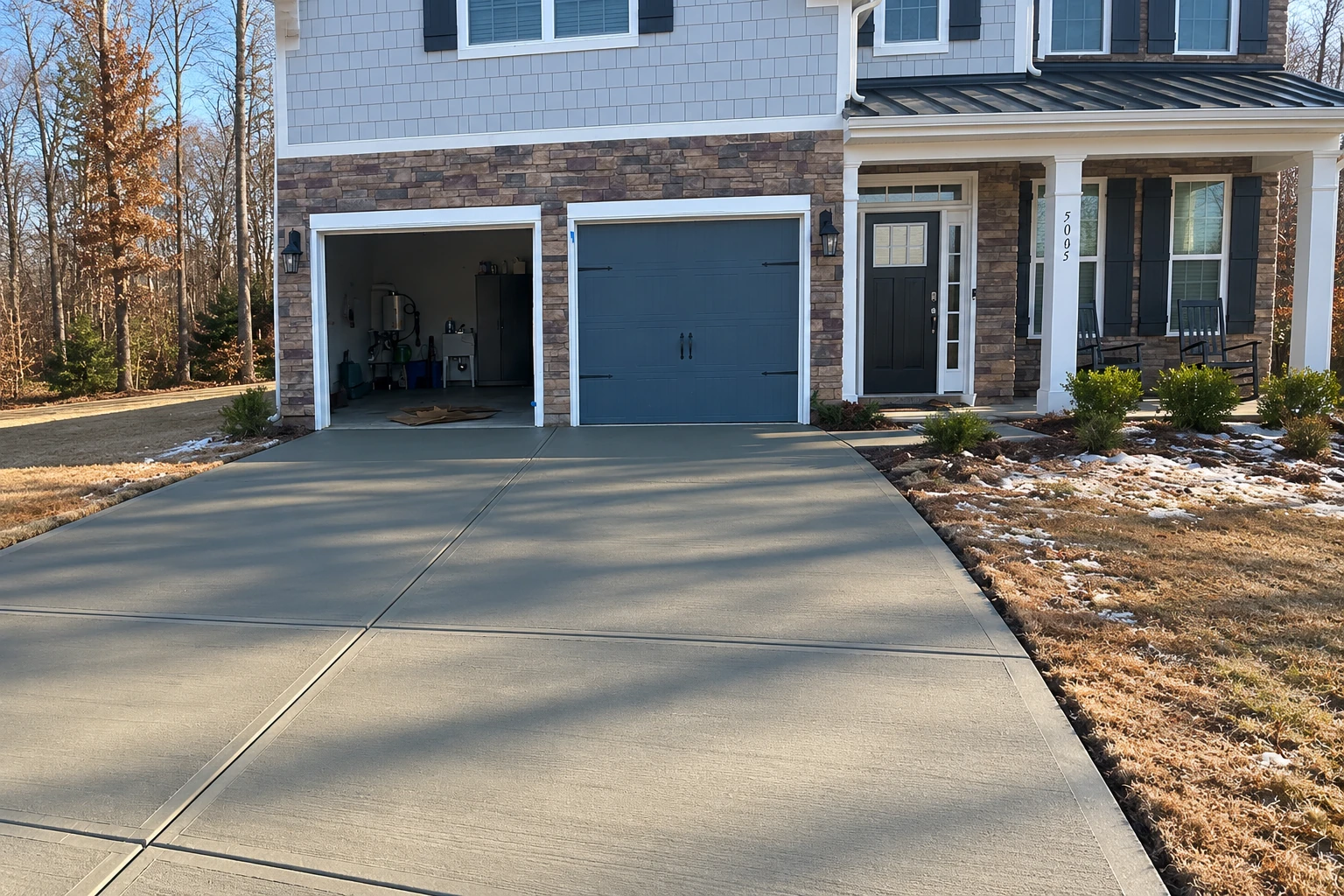
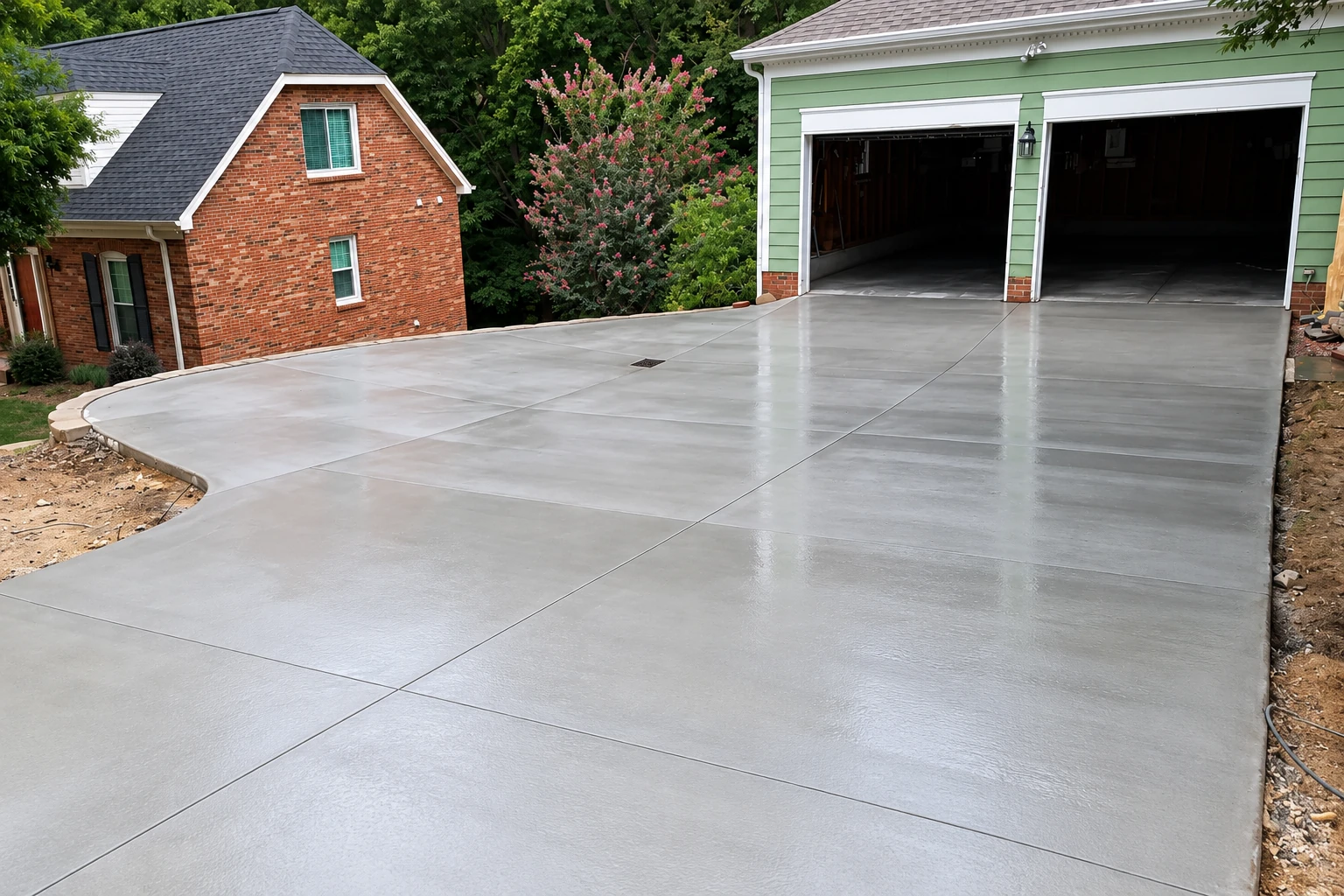
Concrete driveway building
When an older driveway has cracked, sunk at the garage or sends water toward the house, we tear it out, rebuild the base and pour a new one.
Concrete patio construction
A backyard patio should drain away from the house, so we set the slope before the forms go in and pack the base so the slab stays level.
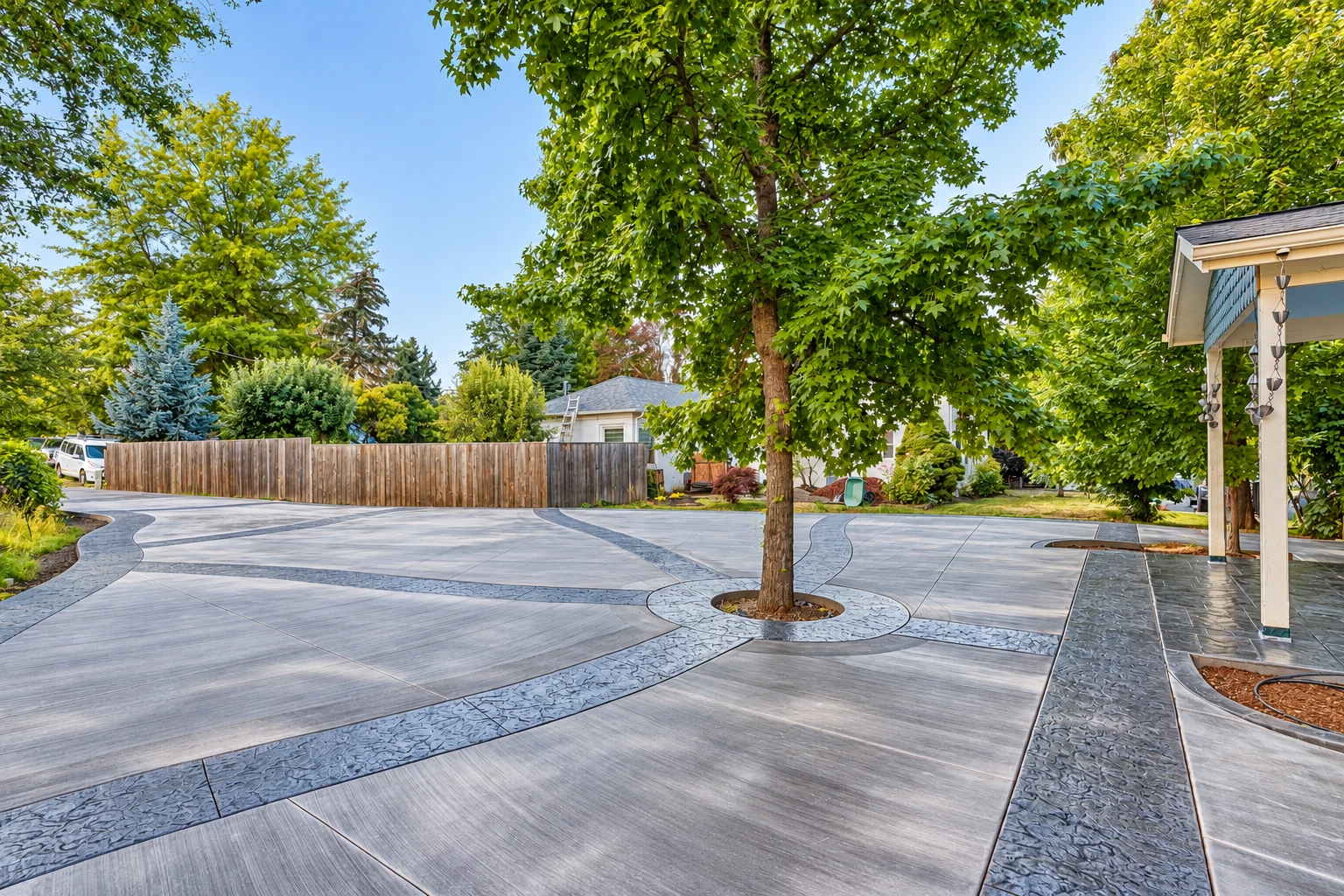
Stamped concrete services
Stamped concrete gives a patio or entry the look of stone or tile, and it holds up best when the slab under the pattern is built right first.
Concrete sidewalk building
Walks that have heaved or settled into trip edges are common on older Santa Barbara lots, and we replace them with a packed base and new joints.
Garage floor concrete
When a garage slab is cracked, stained or sloped the wrong way, we pour a new floor that drains toward the door and stands up to parked cars.
Decorative concrete
Colored and textured finishes let new concrete sit well next to the older houses and gardens here, from front entries to garden paths.
Concrete retaining walls
Sloped yards often need a wall to hold ground back, and the footing and drainage behind it matter most, because they keep it standing.
Concrete floor installation
For workshops, studios and additions, we pour interior concrete floors flat and level over a prepared base, ready for a finish or left exposed.
Concrete pool decks
Around a pool the deck has to carry water away and give bare feet grip, so we slope it toward drains and choose a finish that isn't slick.
Concrete steps construction
Front steps on sloped lots take steady use, and a crumbling edge is a trip hazard, so we form them at even heights on a packed base.
Slab foundation building
For a new home, addition or garage, we build the slab foundation to the plans, with the forms, steel and ground work checked before the pour.
Foundation installation
Builders and owners bring us their plans for additions and new structures, and we lay out, dig and pour the foundation the way the drawings show it.
Concrete parking lot building
Small lots for shops, offices and apartment buildings need a thick, well-drained slab, so we plan the slope and base for steady traffic before we pour.
Concrete footings
Decks, walls, posts and additions all rest on footings, the buried concrete that spreads the load, so we dig to the depth the plans call for.
Foundation raising
When part of a house or slab has settled, we find out why before we lift it, because lifting without fixing the cause rarely holds.
Concrete cutting
We cut openings, trenches for new lines and clean edges where an old section comes out, so the concrete that stays isn't cracked or chipped by the work.
Get a free written estimate for your Santa Barbara concrete job
Send the form and we'll get back to you within one business day. I'll come out, measure and look at the ground, then send a written estimate that spells out what's in it, with no obligation.
(805) 869-0160- Based in
- Santa Barbara, CA 93101
- Hours
- Mon–Fri: 6 AM–10 PM, Sat–Sun: 8 AM–10 PM
What working in Santa Barbara means for your job
Inside city limits, the City of Santa Barbara issues building permits, and its Permit Center is where questions about permits and approvals for construction go. If your address falls outside city limits, the county covers it instead, so we check which office is yours before we set a date. If the job needs a permit, we pull it or walk you through it and plan the schedule around review and inspections, which usually set the pace more than the pour does. We're fully licensed and insured.
What moves the price is mostly the size of the job, how much old concrete comes out, how deep the base has to go and how easily a truck can reach the forms. Older neighborhoods here often have narrow streets and tight driveways, which can mean pumping or wheeling the concrete in, and the written estimate spells out which of those your job needs. We do the same work in Montecito and Goleta, where a different office may cover the address, so we start by finding out who that is.
Why Santa Barbara driveways and walks wear out
Water is behind most of the failures we look at here. The city has been studying flood resilience for the Laguna Creek watershed, and on a single lot the same question comes up on a smaller scale, which is where the water goes once it hits the slab. A driveway that falls toward the house, or a patio with nowhere to shed water, keeps the ground under it wet, and wet ground settles and washes out. We check how water moves across your lot before we plan anything, and we set the slope so it runs away from the house.
Slope is the other thing. Plenty of yards here rise or drop from the street, so a new driveway or patio often needs steps, a retaining wall or a deeper base on the low side, and we plan those with the slab instead of adding them after.
How a concrete job runs when you call us in Santa Barbara
Here's what happens from your first call to the final walk-through, and what we'll need from you at each step, which usually isn't much.
Call or send the form
Tell us roughly what you have in mind and where the house is, and we'll get back to you to set a time for the site visit. Photos help, but they aren't needed.
I come out and measure
I measure, look at the ground and how water moves across it, and ask how you'll use the concrete, then send a written estimate that lists what's in it, so you can compare it line by line. It helps if you're home so we can walk the spots that worry you.
We check permits and prepare
Before the pour we confirm what the job needs from the city or county, and if a permit is involved, review and inspections decide the date. Then our crew digs out, packs the base and sets the forms, with me on site.
We pour, then walk it
We pour early in the day so the top doesn't dry out before we finish it, because that's what leaves a weak, dusty surface later, and we cut the control joints while the concrete is still young. When it's done, I walk the finished work with you and go over how long to stay off it.
Questions about concrete work in Santa Barbara
How much does a new concrete driveway cost in Santa Barbara?
Your price is set mostly by the slab's size, the tear-out and the base work, plus the finish you pick, and I put all of it in a written estimate after I see the site. A broom finish, the light brushed texture that gives tires and shoes grip, costs less than stamped or colored work. If the budget is tight, I'd rather you save on the finish than the base, because the base is what keeps the slab from sinking and you can't fix it later without tearing the slab out.
Which building code applies to a concrete project in Santa Barbara right now?
Projects submitted to the city now fall under the 2025 edition of the California Building Standards Codes, also called Title 24, which the city's Building and Safety Division has enforced since January 2, 2026. A project submitted on or before December 17, 2025, may follow the 2022 edition instead. If yours went in before that date, check which edition it was submitted under, and we'll build to that.
Do I need a permit for a concrete retaining wall in Santa Barbara?
The city's older checklist of work exempt from a building permit listed residential retaining walls up to 4 feet tall, measured from the bottom of the footing to the top of the wall. That exemption didn't cover a wall holding back extra weight above it, like a driveway or a rising yard, or one built on a slope of 20 percent or steeper. The city's newer amendments raised the height at which walls need a permit from 3.5 to 5 feet, but that change leaves out retaining walls and block walls, so we confirm the current rule with the city before we plan any wall.
Does a new concrete walkway need a permit in Santa Barbara?
The city's older exempt-work checklist listed uncovered residential walks no more than 10 inches above the ground beside them as not needing a building permit. That applied only when there's no basement or room below the walk and it isn't part of an accessible route or the way out of a room people normally use. Other city divisions can still have a say, and the Permit Center's counter staff answer questions like this one.
How long before I can drive on a new concrete driveway in Santa Barbara?
You can walk on a new driveway well before you can drive on it, because concrete keeps gaining strength for days after the pour while it cures. Curing is that slow hardening, and putting a car's weight on it too soon can crack a slab that would otherwise have been fine. I give you the walking and driving waits for your job before we pour, so you can plan where to park.
What causes concrete driveways in Santa Barbara to crack and sink, and will a new one crack too?
Most sinking we see comes from the subgrade, the soil the slab sits on, being raked level instead of dug out and packed, so it settles and the slab drops with it. A new slab will still crack, because all concrete shrinks as it dries, but control joints, the shallow grooves cut across it, give those cracks a straight line to follow instead of wandering across the middle. Rebar, the steel set inside the slab, holds the pieces together if a crack opens, and a packed base keeps them level.
Santa Barbara, CA
Ask about your Santa Barbara concrete project
The sooner I see the ground, the sooner we know what the base and drainage need, and that's the part that decides how your slab holds up.